
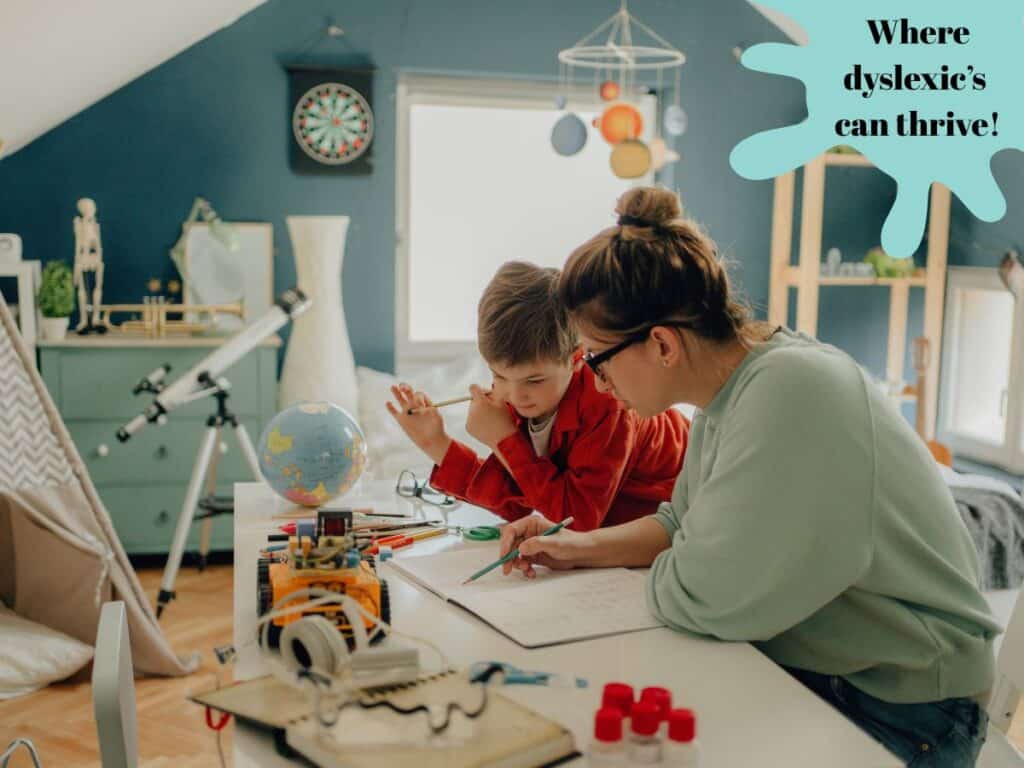
If you are thinking about homeschooling a dyslexic child but are not sure if it is the right move, welp here’s my honest version from a mom who did both and lived with the results of both. (Barely..ha ha)
We were not all-in homeschoolers from the start. We did public school. We did homeschool 2 different times. We went back to public school for high school. We watched what worked and what did not at every stage.
What Public School Offered That We Could Not Replace
Let me start here because I think it is important to be fair.
Public school gave our son something I could not. Friends his age. A social life. The feeling of being part of something. He wanted that and it mattered to him in ways I could not manufacture at home. He really didn’t care about anything else that high school had to offer. He got into other sports that didn’t involve school like dirt bikes and hunting. So he was mainly there to goof around with his buddies.
It also gave him a diploma. When he walked across that graduation stage it was real. He had earned it, through a system that was not built for him and he knew it. That meant something. I earned it and our entire family earned it! He is one bullheaded kid and he didn’t make it easy but we made it through.
Why Public School Was Not Working for Our Son
Public school moves on a calendar. Ready or not the class moves forward. For a dyslexic child who needs to get the basics solid before adding the next layer that pace is a problem that never really goes away. It just compounds.
The pullout situation was its own kind of damage. From elementary school through middle school our son was regularly pulled out of his regular classes for reading intervention. That sounds like support. In practice it looked like this.
He finally feels like a regular kid sitting in class with everyone else. Someone comes to the door. His name gets called. He gets up and leaves while the class keeps going without him.
He comes back behind. Again. Trying to figure out what he missed while also keeping up with what is happening now. Embarrassed. Every time.
And the reading intervention was not working. We asked about trying something different and the answer was always the same. We need to stay consistent with the program.
Consistent with something that is not working is not a strategy.
We also ran into the issue of the program not being flexible enough for our son. After two years he was still dropping vowels and leaving off the ends of words. Nobody was willing to adjust. More of the same thing that had not worked yet was the only answer they had.
What Homeschooling a Dyslexic Child Actually Gave Us
Freedom is the honest answer. But not the kind of freedom people picture when they imagine homeschooling.
It was not a perfectly scheduled school day at the kitchen table. It was messy and real and it looked completely different depending on the day and what our son needed.
Some days it was worksheets at the table. Some days it was educational websites and audiobooks. Some days we were outside exploring. Some days the grocery store was the entire school day and that was fine. He was reading labels, counting change, navigating a list. That is real life reading and it mattered more than a worksheet ever did.
We learned sight words throwing a ball in the backyard. We worked on reading instructions and measuring during woodworking projects. We sat and listened to a World War II veteran tell his stories, and I promise you my son remembered every single detail of that conversation. None of those things looked like school. All of them were.
When you need a break you get one. Sometimes that meant the whole day. Rome was not built in a day and neither is a dyslexic reader. Pushing a kid past the point of frustration does not produce learning. It produces shutdown. At home we could stop before we got there.
We could try anything we wanted and learn however it worked for him. That flexibility is the thing a classroom schedule can almost never give you and it is the thing dyslexic learners need most.
When Homeschooling Got Hard
AHHHHHHH! Not gonna lie there were many ‘pulling my hair out’ days.
It is a real commitment. Time, energy, and patience and some days all 3 run out before lunch.
There were days I was not the best teacher for my son because I was also his mom and those two roles do not always mix well. Emotions got in the way. We had sessions that went nowhere because one of us or both of us hit a wall.
Finding the right materials took a lot of trial and error. Most reading programs are built for young children. Our son was not going to sit still for anything that felt like it belonged in a primary classroom. He had pride and he deserved to have it respected. Finding things that were age appropriate and actually effective took more searching than it should have.
That is a big part of why I started building my own materials. If I had to figure it out the hard way I might as well make it easier for the next parent who ends up in the same place.
When Homeschooling a Dyslexic Child Makes the Most Sense
In my opinion and this is just our experience talking, the early years are the most important window.
The foundation a child builds in elementary school is what everything else sits on. Getting that foundation solid matters more than keeping pace with a grade level. If your child is young and struggling and you have any ability to pull them out for even a couple of years that investment pays off in ways that are hard to measure but impossible to miss.
Public school will still be there. The social piece will still be there. But that window where the basics need to get locked in does not come back.
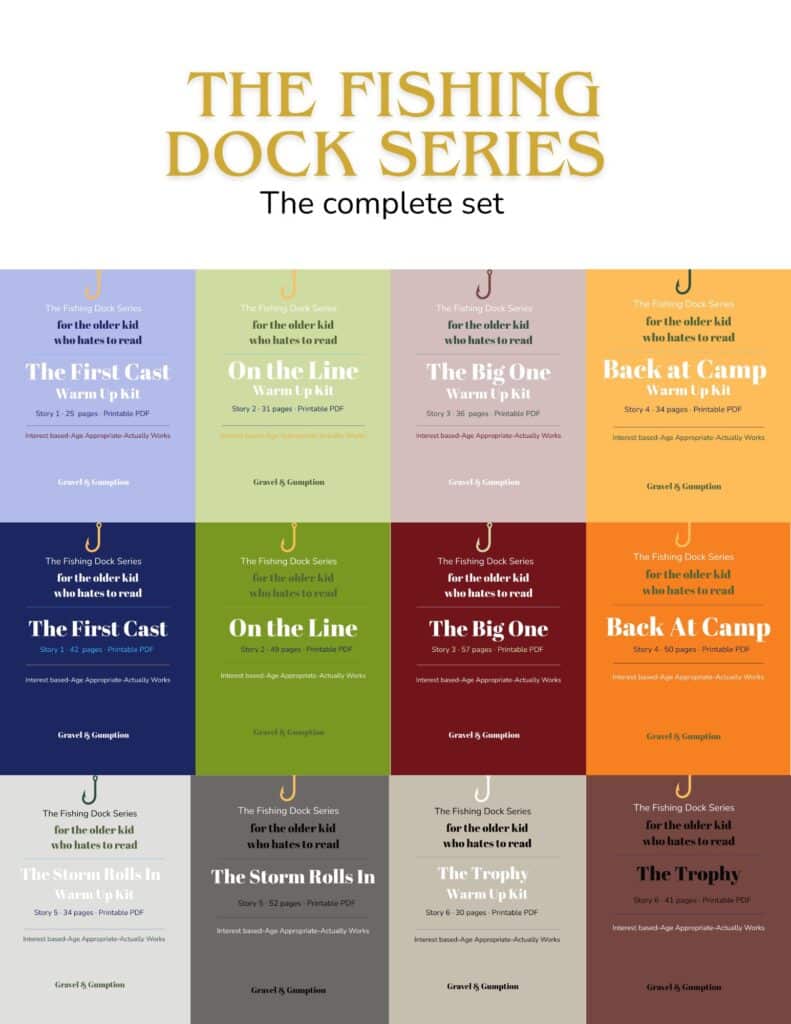
Stumbling through public school? Are you wondering if it has your child’s best interest at heart? Check out these and see if you get a different reaction. Sometimes just changing things up, can do wonders for their continued learning.
If You Cannot Homeschool Full Time
I was able to stay home during those years and I know not every family can do that. Financially we couldn’t either as we did have 4 other kids who wanted ‘stuff’, but we were going to make it work one way or another.
When our son went back to public school later I shifted from homeschooling to tutoring him in the evenings or on weekends. Nothing crazy. Thirty minutes here and there. Enough to keep things from slipping. Enough to keep the practice going.
And that is really the key with dyslexia. Practice. Repetition. Over and over until it sticks. Hands on whenever possible. Our son needed to do things not just read about them and once we stopped fighting that and started working with it everything got a little easier.
If you cannot homeschool full time that is okay. What you do at home on the side still counts. It counted for us every single time.
That is exactly why I created the printables at Gravel and Gumption. Age appropriate materials that do not feel like more school. Structured enough to actually move the needle. Something you can do at the kitchen table or in the backyard or at the grocery store for thirty minutes and still feel like you did something that mattered today.
Because you did.
The Bottom Line
Public school gave our son friends, structure, and a diploma. Homeschooling gave him the foundation he needed to actually learn to read at his own pace without shame attached to every session.
We needed both and I am glad we did both. But if I had known then what I know now I would have started homeschooling earlier and stayed longer. Not forever. Just long enough to get the basics solid before putting him back in a system that was never going to slow down for him.
That window was more important than I understood at the time.
Everything I share here came from years of sitting across the table from a kid who learned differently. The printables in the shop are what we actually used. If you are looking for something age appropriate and built for an older struggling reader, start here.

I am a mom sharing our story with dyslexia. This is not professional educational advice. Every child and every family situation is different.
Pingback: How We Got Our Dyslexic Son Through School -
Pingback: Is Dyslexia a Learning Disability? Yes, But Not Like The Others -