
If your child is in middle school or high school and you’re lying awake wondering if you missed your window, I want to say this first: it is not too late to help an older child with dyslexia.
I’m a mom, not a specialist, so I can only tell you what we lived. But we lived it all the way through high school, and our son graduated this year. Here’s what the high school years looked like, and what I’d tell any mom who’s worried she’s out of time.
Coming Off Homeschool and Into High School
We were just coming off of homeschooling when my son started high school. I know some teachers and administrators don’t think much of homeschooling. I heard about it. Whatever. He improved a lot at home, and I’m not going to apologize for that.
But he wanted the social side of high school, and I wanted him to have it. So we went back in, and I went in with a plan. I looked up all the classes he could take for the 4 years, and planned out how to free up his last year to do the apprenticeship. He was able to start midway through his Junior year actually through his IEP.
We Got Lucky With the Right Person
I’ll tell you what made the biggest difference. We ended up with a great IEP case worker, a man who totally got our son. He didn’t talk down to him and he didn’t treat him like a problem to manage. He understood him.
If you get one person like that in the building, hold on tight. And if you don’t have one yet, keep asking questions until you find one. A single adult who gets your kid can change the whole school experience.
The Plan: Credits Early, Work Later
My goal was simple. Get all of his required credits done in the first couple of years, so that junior and senior year he could do a work apprenticeship.
He didn’t want to be in school all day. Honestly, I’m sure plenty of his teachers weren’t thrilled about having him there all day either. So I stopped trying to make him fit the mold and asked a different question: what does he need to be able to do when he leaves?
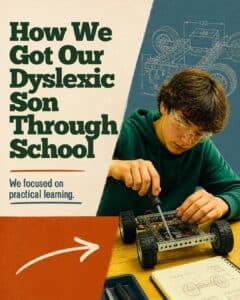
My answer was to help him be functional in the real world. Hold down a job. Fill out a loan application. Buy a house someday. Read a blueprint if that’s the kind of work he ends up in. Those are real life skills for dyslexic teens that will matter when he’s 25, not whether he finished a Shakespeare unit.
It worked. Our son earned plenty of credits through his work apprenticeship, and he graduated. He worked for a landscaping company and worked on a farm for his apprenticeship jobs.
(A quick note: rules for work and apprenticeship credits are different from state to state and school to school. Ask your school counselor what’s available where you live.)

I have to tell you about an IEP meeting, because I still laugh about it.
One of his teachers suggested that maybe he’d like to join the school newspaper, or take an English Literature class.
I looked at that teacher and thought, did you even read anything about my son? This was a kid still working on regular English. Shakespeare was not on his radar, and neither was the school newspaper.
And here’s the funny part. Our daughter, his older sister, is an English teacher now. Ironic, right? She knew that was never going to happen with her little brother, and she’d have told them so for free.
I’m sharing this because if you’ve sat in a meeting like that, you know the feeling. Frustrating is putting it mildly. It’s why I kept pushing for what actually fit him.
So, Is It Too Late?
Here’s my honest answer. It’s not too late to help your older child, but you may need to change what “help” means.
When your child is little, help usually means catching up in reading. By high school, the finish line can look different. For us, the goal became a young man who could work, handle his own life, and keep figuring things out. He still struggles with parts of reading and he may always. He is capable, resourceful, and doing well.
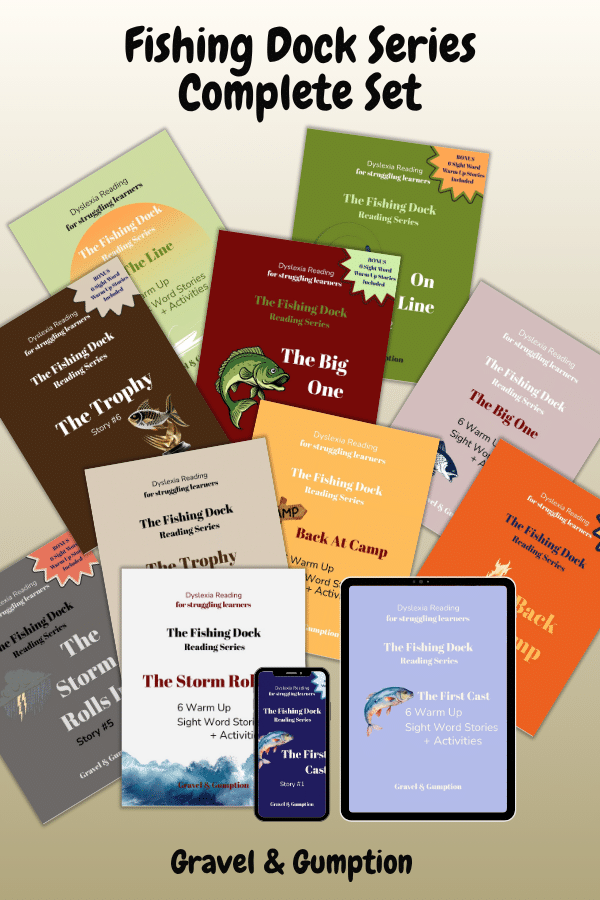
That is still progress, even if it doesn’t show up on a report card. My Reading Series is a good way to help them keep up their reading skills while they’re in high school.
What I’d tell a mom with an older child:
- Start with what they’ll need. Think about the real life skills your child will use as an adult, and work backward from there.
- Look for your person. A good case worker, counselor, teacher, or coach can make all the difference.
- Use the flexibility that’s there. Between an IEP and a good counselor, there’s often more room than anyone tells you.
- Keep the door open. His learning is still ongoing, even though it doesn’t happen at the kitchen table anymore.
- Don’t wait to start. Whether your child is 10 or 17, today is the best day to try something new.
What I Want You to Know
You haven’t missed your window. You may be tired, and you may feel behind, but behind is not the same as too late. Kids keep growing and learning long after we think they’ve stopped, and sometimes the biggest jumps come when no one is watching.
I’m proof of that, and so is my son.
And if you’re in the thick of it right now and want to tell me about it, I’d love to hear from you. You’re not alone in this.

Everything I share here came from years of sitting across the table from a kid who learned differently. The printables in the shop are what we actually used. If you are looking for something age appropriate and built for an older struggling reader, start here.

I am a mom sharing our story with dyslexia. This is not professional educational advice. Every child and every family situation is different.