
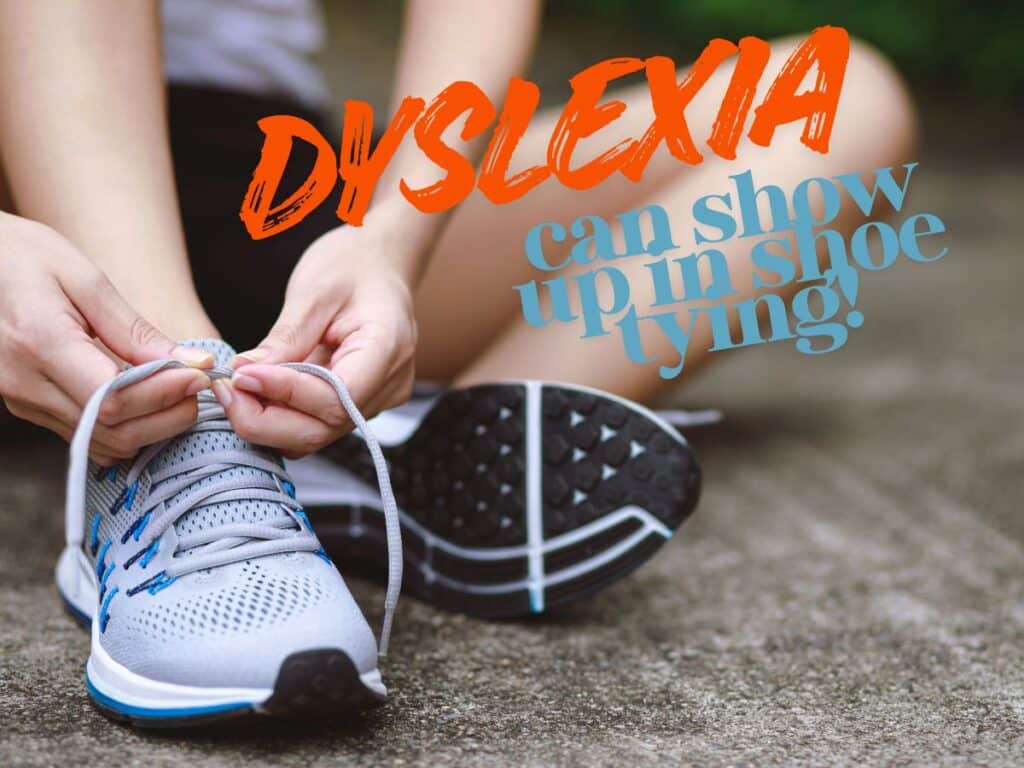
Most people think dyslexia is only about reading. But some of the earliest signs of dyslexia in our house had nothing to do with books. Left and right confusion, shoe tying that never seemed to stick, coordination that was just a little bit off. These were the clues that showed up first, years before reading became the obvious problem, and for a long time I had no idea they were connected.
If your child mixes up left and right long after other kids have it down, took forever to learn to tie shoes, or struggles with catching and dribbling, keep reading. This one is for you.
The Signs of Dyslexia I Was Not Looking For
Left and right was the big one. He mixed them up constantly. Directions confused him. Shoe tying fell apart every time I tried to teach it. I would show him, he would try, he would get frustrated, and we would both end up done for the day.
Then there was coordination. Catching a ball, dribbling, skipping, hopscotch. Anything that asked his eyes and hands or his left and right sides to work together took him a lot longer than most kids.
Here is the sneaky part. You could not always see it because he was so active. He was always outside, always moving, always doing something. A kid who is busy and happy does not look like a kid who is struggling. It was not until I looked back that I saw how much of it had been there from the very beginning.
In my post, Dyslexia and Sports I talk about our son and his time playing football. The coach was struggling and coudn’t figure it out until we let him know what was up. It was a piece of cake after that.
The Shoe Tying Trick That Worked on the First Try
I practiced shoe tying in front of him about a hundred times. He would watch, he would try, he would get frustrated, and we would end up nowhere.
Then one day I had a simple idea. Because of his left and right confusion, what if the problem was me? When I sat across from him and used my right hand, he was looking at a mirror image. My right was on his left. For a kid who already struggled to keep left and right straight, that was a lot to sort out before he even touched the laces.
So I sat next to him instead. Same side. When I used my right hand, he was seeing my right hand on his right side, exactly the way his own hands would move.
He got it the first time. He has tied his own shoes ever since.
[Add how old he was here and how it felt when he finally got it.]
If your child is stuck on shoe tying, try this before you try anything else. It costs nothing and it might be the only thing standing in the way.

Why Dyslexia and Left Right Confusion Go Together
Here is the part that connected everything for me.
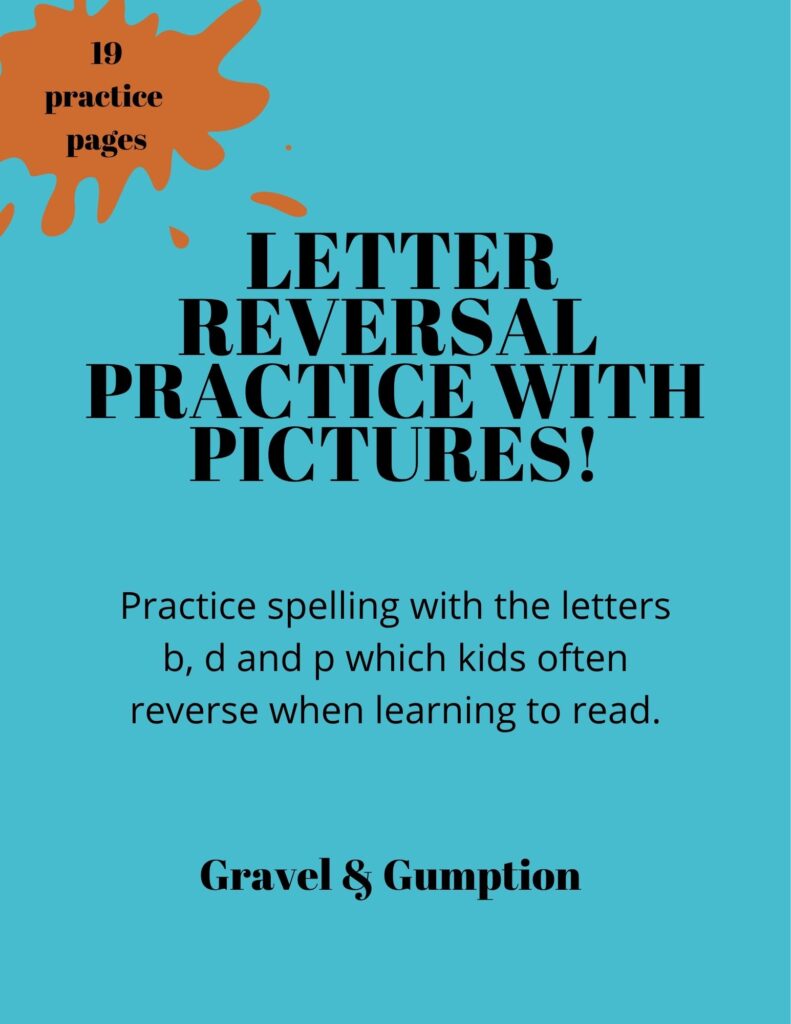
Reading and writing go left to right. Letters like b and d, or p and q, are the exact same shape flipped in opposite directions. For a child who already struggles to hold onto left and right, those letters are genuinely hard to keep straight because the only difference between them is direction.
In our experience, working on left and right helped with more than shoes and ball games. It helped with reading direction and letter reversals too. The two things were connected all along. I just did not know it at the time.
What Crossing the Midline Has to Do With It
This is something I had never heard of before I started digging into why my son struggled with certain movements, and it became a big part of how I approach activities and printables at Gravel and Gumption.
Crossing the midline simply means using one hand, foot, or eye to reach across the center of the body to the other side. Think of touching your right hand to your left knee. Or drawing a big slow figure eight in the air. Or passing a ball from one hand to the other around your back.
Those movements get both sides of the body working together. And they connect directly to the same left to right tracking we use when we read across a page.
They are also easy to turn into games, which is why they work so well with kids who will not sit still for a worksheet.
A few easy ones to start with today:
Tap your right hand to your left knee, then left hand to right knee. Back and forth.
Draw giant sideways figure eights in the air, on a chalkboard, or in the dirt.
Pass a ball from one hand to the other around your back without dropping it.
Skip with exaggerated arm swings (in sports they called it cherry picking). This one goofed up our son for a long time. The coordination of arms and legs really frustrated him.
None of these feel like therapy. They feel like playing. That is the whole point.
A Few Honest Notes
I am a mom, not a therapist or a specialist. Everything here comes from what we lived and what we noticed along the way. Every dyslexic child is different and these activities are one more tool in a toolbox that hopefully keeps getting bigger.
Also worth saying: coordination trouble sometimes shows up alongside dyslexia as its own separate issue called dyspraxia. If your child’s coordination is really affecting their daily life it is worth mentioning to your pediatrician, who can point you toward an occupational therapist if needed. You know your kid better than anyone.
What I Want You to Take Away
If your child has these signs you are not imagining it and you did not miss something obvious. A lot of this hides in plain sight, especially in active busy kids who seem fine on the outside.
Sometimes looking at a problem from a completely different angle changes everything. Moving from in front of him to beside him was the difference between a hundred failed attempts and getting it right the first time.
Keep trying. Keep paying attention. The answer is often simpler than you think.

Everything I share here came from years of sitting across the table from a kid who learned differently. The printables in the shop are what we actually used. If you are looking for something age appropriate and built for an older struggling reader, start here.

I am a mom sharing our story with dyslexia. This is not professional educational advice. Every child and every family situation is different.
Pingback: Is It Too Late to Help An Older Child With Dyslexia? -